The Political Economy of Sports Fraud: A Forensic, Legal, and Governance Analysis of Indian Premier League Integrity Crises
The Indian Premier League (IPL) revolutionized the global sports economy by blending high-velocity Twenty20 cricket, entertainment media, and private capital. However, this rapid commercialisation also created a complex landscape of financial irregularities, integrity failures, and governance deficits. From transnational money laundering and arbitrary corporate terminations to systemic spot-fixing, synthetic leagues, and digital cyber-scams, the IPL has repeatedly tested the limits of sports law, state regulatory bodies, and transnational financial systems.
This report provides a forensic and legal examination of these phenomena. It traces the operational history of IPL-related scandals, analyses the evolution of regulatory responses, and highlights the structural vulnerabilities that continue to challenge the Board of Control for Cricket in India (BCCI).
The Foundations of Regulatory Deficit: The Lalit Modi Era (2008–2010)
The corporate architecture of the IPL was largely designed by its founding commissioner, Lalit Modi, whose career prior to and during his tenure at the BCCI was characterized by a pattern of regulatory bypass and institutional arbitrage. Understanding this operational history is essential, as the governance vulnerabilities that later emerged in the IPL were closely tied to its initial administrative model.
The Behavioral Trajectory of the League’s Architect
Long before the conceptualisation of the IPL, Modi had been implicated in various legal and commercial disputes. In March 1985, while studying in the United States, he was arrested in Durham County, North Carolina, on charges of conspiracy to traffic cocaine, assault, and second-degree kidnapping. This led to a suspended two-year prison sentence and five years of probation under a plea bargain.
Upon returning to India in 1986, Modi sought to leverage private capital in sports broadcasting. In 1994, his firm, Modi Entertainment Network (MEN), secured a ten-year, USD 975 million contract as the pan-India distributor for ESPN. This contract ended prematurely when ESPN declined to renew it, alleging that MEN had underreported cable distribution revenues.
Modi’s entry into domestic cricket administration was similarly combative. After a failed attempt to take over the Himachal Pradesh Cricket Association in 1999, he turned his attention to the Rajasthan Cricket Association (RCA), which had been controlled by the Rungta family for decades. In 2005, utilizing his political connections, Modi helped pass the Rajasthan Sports Act. This law stripped voting rights from 66 individual members affiliated with the Rungta household, leaving only the 32 district associations as voters. Consequently, Modi was elected President of the RCA by a margin of a single vote, establishing the political-administrative model he would later use to launch the IPL in 2008.
Institutional Deficits and Unapproved Transactions
Between 2008 and 2010, the IPL operated with minimal oversight from the BCCI Governing Council. This administrative model allowed several unauthorized commercial arrangements to take place, which later formed the basis of the BCCI’s disciplinary action and a lifetime ban against Modi in 2013.
| Key Charges of Administrative Misconduct Against Lalit Modi | Legal & Operational Implications |
| Rigging Franchise Bids | Added two unapproved, highly restrictive clauses to the invitation to tender draft to favor specific bidding groups. |
| Undisclosed Conflicts of Interest | Failed to disclose that his step-daughter’s husband, Gaurav Burman, held a significant stake in Global Cricket Venture, which controlled the IPL’s internet rights. |
| Unauthorized Commercial Awards | Awarded theatrical and free commercial time rights to private agencies without the approval of the BCCI Governing Council. |
| Coercion of Franchises | Allegedly threatened representatives of the Kochi Tuskers Kerala consortium to surrender their franchise rights to favor another bidding group. |
| Parallel League Planning | Formulated plans for a rival cricket league based in England, bypassing the regulatory authority of both the BCCI and the ICC. |
The South African Relocation of 2009: FEMA Violations and Transnational Fund Routing
The vulnerabilities of the IPL’s early financial operations became clear during the tournament’s second season in 2009. Citing security concerns due to a clash with the Lok Sabha general elections, the Union Home Ministry expressed its inability to provide security for the matches. In response, the BCCI relocated the entire tournament to South Africa on short notice.
The Mechanics of Unauthorized Remittances
The haste of this relocation resulted in several major violations of Indian foreign exchange laws. An investigation by the Enforcement Directorate (ED) revealed that the BCCI remitted Rs 243 crore (approximately USD 49 million) to Cricket South Africa (CSA) to cover tournament expenses without obtaining the mandatory prior permission from the Reserve Bank of India (RBI) under the Foreign Exchange Management Act (FEMA).
These transactions, routed through the State Bank of Travancore’s Jaipur branch, exhibited significant procedural irregularities:
- Pre-Contractual Remittances: The first two financial transfers were executed on March 28, 2009, prior to the formal signing of the hosting agreement between the BCCI and CSA.
- Delayed Post-Tournament Transfers: The final two remittances were sent long after the tournament concluded on May 24, 2009. The last transfer of USD 10,362,799 was executed fifteen months after the event had ended.
- Proxy Account Diversions: The ED probe identified an additional Rs 44 crore in payments transferred to a “proxy” bank account maintained by the BCCI in South Africa. These funds remained entirely unaccounted for in the board’s official books.
The Scale of the Enforcement Directorate’s Investigations
These irregularities prompted the ED to launch a series of wide-ranging investigations. By June 2015, the agency was adjudicating 16 distinct FEMA violation cases involving an estimated Rs 1,600 crore to Rs 1,700 crore against prominent IPL-BCCI officials, including Lalit Modi and former BCCI President N. Srinivasan.
Under FEMA provisions, the maximum penalty for such infractions can be up to three times the amount of the proven violation. In February 2015, the ED served a Rs 425 crore show-cause notice to Modi, Srinivasan, the IPL, and associated multimedia firms. This notice focused on foreign exchange infractions during the allocation of the 2009 media rights.
To compel Modi to participate in these investigations after he fled to London in 2010, the ED secured an Interpol “Blue Notice”. This notice alleged that he had used his position to acquire substantial foreign exchange illegally and had invested in IPL franchises through offshore front companies.
Modi defended his actions by filing a petition in the Supreme Court of India. He urged the court to direct the BCCI to pay the Rs 10 crore personal penalty levied against him by the ED, arguing that all financial transactions made during the 2009 South African season were collective decisions of the cricket board rather than individual actions.
Corporate Arbitrariness and Structural Liability: The Kochi and Deccan Chargers Arbitrations
The institutional governance of the IPL has also been impacted by disputes between the BCCI and its franchises, which have occasionally resulted in arbitrary contract terminations and substantial financial liabilities for the board.
The Kochi Tuskers Kerala Political Fallout and Legal Resolution
The Kochi Tuskers Kerala (KTK) controversy of 2010 highlights the intersection of political influence and franchise ownership in the IPL. A consortium led by Rendezvous Sports World (RSW) won the rights to the Kochi franchise with a bid of USD 333.2 million. Modi publicly opposed this bid, questioning the consortium’s financial structure and the allocation of a 25% free equity stake (equivalent to 15% of the franchise’s long-term revenue) to Sunanda Pushkar, who was set to marry Shashi Tharoor, then Minister of State for External Affairs.
Modi alleged that Pushkar’s equity was a proxy arrangement for Tharoor, who had actively supported the Kerala bid. The ensuing political storm led to Tharoor’s resignation in April 2010. Modi claimed that senior Congress leaders, including Sonia Gandhi, Ahmed Patel, and Pranab Mukherjee, pressured him to approve the Kochi consortium’s shareholding structure without further scrutiny. He also stated that he was forced to sign the final franchise agreement under duress on the instructions of then BCCI President Shashank Manohar.
Following persistent internal disputes among its shareholders, KTK failed to submit its mandatory 10% bank guarantee for the 2012 season by the deadline of March 22, 2011. Consequently, the BCCI terminated the franchise agreement in September 2011.
The franchise owners challenged this termination, initiating arbitration under the dispute resolution clause of the agreement. In 2015, the arbitral tribunal ruled that the termination was wrongful. The tribunal awarded Rs 384 crore to Kochi Cricket Private Limited (KCPL) for loss of profits, and Rs 153 crore to RSW for the wrongful encashment of their bank guarantee, plus an 18% annual interest rate.
The Bombay High Court upheld this arbitral award in June 2025. Justice R.I. Chagla ruled that the court’s jurisdiction under Section 34 of the Arbitration and Conciliation Act is limited and cannot serve as an appellate body over an arbitrator’s findings. The court agreed that because the BCCI had continued to engage with the franchise and accepted payments during the 2011 season despite the missing guarantee, it had effectively waived its right to enforce the strict contractual deadline under Clause 8.4 of the agreement.
The Deccan Chargers Termination and the Rs 8,000 Crore Award
A similar administrative dispute arose with the Deccan Chargers (DC) franchise, owned by Deccan Chronicle Holdings Limited (DCHL). In August 2012, the BCCI issued a 30-day show-cause notice to DCHL over unresolved financial defaults, including unpaid player salaries and outstanding debts to foreign cricket boards. Although DCHL rectified these defaults within the 30-day window, the BCCI Governing Council terminated the franchise on the 29th day.
DCHL challenged the termination in court, and the dispute was referred to an arbitral tribunal presided over by retired Supreme Court Justice C.K. Thakker. In July 2020, the tribunal declared the termination illegal and arbitrary. The arbitrator observed that:
- The termination was executed prematurely before the contractually mandated rectification period had expired.
- The BCCI had acted inconsistently by permanently expelling the Chargers over curable financial defaults, while other franchises implicated in actual illegal activities (such as spot-fixing and betting) were only suspended for two seasons.
Consequently, the tribunal awarded DCHL Rs 4,814.67 crore in damages, which, with accrued interest and costs from 2012, amounted to an estimated Rs 8,000 crore. This remains one of the largest damages awards in sporting arbitration history.
Comparative Legal Analysis of Arbitrary Terminations
The legal outcomes of the Kochi Tuskers and Deccan Chargers disputes illustrate the financial risks the BCCI faced due to a lack of administrative transparency and consistent enforcement.
| Metric | Kochi Tuskers Kerala Dispute | Deccan Chargers Dispute |
| Initial Contract Date | April 11, 2010 | 2008 (Ten-Year Franchise Agreement) |
| BCCI’s Stated Reason for Termination | Failure to submit a 10% annual bank guarantee by the deadline. | Outstanding financial defaults, including unpaid player fees and debts. |
| Primary Legal Defense of the Franchise | Waiver by Conduct: The BCCI waived the deadline by continuing to accept payments and allowing KTK to play the 2011 season. | Prematurity and Discrimination: The BCCI terminated on the 29th day of a 30-day notice, treating financial defaults more harshly than spot-fixing. |
| Arbitral Ruling (2015 / 2020) | Termination ruled a repudiatory breach of contract. | Termination ruled premature, arbitrary, and discriminatory. |
| Final Damages Awarded | Over Rs 538 Crore (including 18% interest), upheld by the Bombay High Court in 2025. | Rs 4,814.67 Crore principal (totaling ~Rs 8,000 Crore with 10% annual interest). |
Systemic Integrity Collapse: The 2013 Spot-Fixing Scandal and Constitutional Reforms
The 2013 spot-fixing and betting scandal is widely considered the most critical administrative crisis in the history of Indian cricket, exposing links between players, franchise executives, and transnational betting syndicates.
[2013 Spot-Fixing Scandal]
       │
       ▼
[Supreme Court Intervention] ──► [Justice Mukul Mudgal Committee] (Confirmed Betting/Insider Trading)
       │
       ▼
[Justice R.M. Lodha Committee]
       │
       ├─► [Disciplinary Penalties] ──► 2-Year Franchise Suspensions (CSK & RR)
       │                            ──► Life Bans for Executives (Meiyappan & Kundra)
       │
       └─► [BCCI Constitutional Overhaul] ──► "One State, One Vote" (restored partially by SC)
                                          ──► Age & Tenure Caps (70-year limit, cooling-off periods)
                                          ──► Administrative Separation (Professional CEO & Apex Council) [cite: 23]
The Micro-Mechanics of Spot-Fixing
The crisis began on May 16, 2013, when the Special Cell of the Delhi Police arrested Rajasthan Royals players S. Sreesanth, Ajit Chandila, and Ankeet Chavan on charges of spot-fixing. The investigation, which included phone taps initiated in April 2013, revealed how players coordinated with bookmakers.
For example, Sreesanth was arrested for his actions during a match against Kings XI Punjab on May 9, 2013. The police alleged that he had agreed to concede 14 runs in a specific over in exchange for Rs 10 lakh. To signal the bookmakers that the fixed over was starting, Sreesanth tucked a white towel into his waistband and spent time stretching to delay the match, giving bookmakers time to accept bets.
During the over, Sreesanth conceded only 13 runs. According to intercepted phone recordings, realizing he was one run short of the agreed-upon figure, he attempted to bowl a deliberate no-ball on the final delivery to add an extra run. However, the on-field umpire did not call the no-ball, leaving the over’s total at 13 runs.
The Delhi Police subsequently charged the players under the Maharashtra Control of Organised Crime Act (MCOCA), asserting that they were operating as part of an organized crime syndicate. However, in July 2015, the Patiala House Courts cleared the players of all criminal charges. The court ruled that there was no prima facie evidence of an organized crime syndicate, and that India’s existing laws did not contain a specific definition of “sporting fraud” or “cheating in sports” to sustain a criminal prosecution for spot-fixing. While Sreesanth won his case in court, the BCCI maintained its internal disciplinary bans, which were independent of the criminal court’s ruling.
The Indictment of Franchise Executives
The scandal extended beyond the players to franchise ownership. The Mumbai Police arrested Gurunath Meiyappan, the Team Principal of the Chennai Super Kings and son-in-law of then BCCI President N. Srinivasan, alongside actor Vindu Dara Singh, on charges of illegal betting and passing sensitive, non-public team information to bookmakers.
Simultaneously, Raj Kundra, co-owner of the Rajasthan Royals, was implicated in betting activities. While the BCCI’s initial internal probe panel gave both executives a “clean chit,” the Bombay High Court declared that panel illegal. This decision was upheld by the Supreme Court, which then established independent commissions to investigate the matter.
The Mudgal and Lodha Committee Interventions
The Supreme Court appointed the Justice Mukul Mudgal Committee to conduct an independent forensic investigation. The Mudgal Committee’s report confirmed the involvement of Meiyappan and Kundra in betting. It also proposed several recommendations, such as legalizing sports betting to reduce the influence of black money, translating anti-corruption codes into local languages, and establishing a formal registry for player agents to prevent bookmaker recruitment.
To execute these findings, the Supreme Court appointed the Justice R.M. Lodha Committee in January 2015. The Lodha Committee introduced several landmark measures:
- Franchise Suspensions: Suspended India Cements (owners of CSK) and Jaipur IPL (owners of RR) from the IPL for two years.
- Life-Time Bans: Banned Gurunath Meiyappan and Raj Kundra for life from any involvement in cricket matches organized by the BCCI.
- BCCI Governance Reforms: Realigned the administrative hierarchy of the BCCI. It proposed the “One State, One Vote” policy, introduced an age limit of 70 years for administrators, and barred politicians and bureaucrats from holding office. It also separated the board’s commercial operations from its governance by introducing a professional CEO and replacing the 14-member Working Committee with a 9-member Apex Council.
- RTI Compliance: Recommended that the BCCI be brought under the Right to Information (RTI) Act to ensure public accountability.
In August 2018, the Supreme Court modified some of these recommendations. It restored full voting memberships to historic cricket associations in Maharashtra and Gujarat, relaxed the cooling-off period to run after six continuous years in office instead of three, and increased the number of national selectors from three back to five.
The Modern Digital Frontier: Anti-Corruption Protocols and Cyber-Enabled Syndicates
As the IPL grew commercially, the methods used by illegal betting syndicates evolved, shifting from traditional bookmaking to sophisticated digital platforms and cyber networks.
The Evolution of the Anti-Corruption Code
To address these emerging risks, the ICC and its member boards unified their regulatory frameworks. On June 1, 2024, the ICC introduced a single, unified Anti-Corruption Code for Participants, which replaced the previous domestic anti-corruption codes of individual member boards. This unified code ensures that all players, coaches, managers, trainers, and team owners are bound by a consistent set of rules, regardless of whether they are participating in international matches or domestic franchise leagues like the IPL.
The code defines several key offenses:
- Participating in match-fixing or spot-fixing.
- Betting on any cricket match globally.
- Misusing inside, non-public information for betting purposes.
- Failing to report a corrupt approach or suspicious activity to the ACU.
- Failing to cooperate with, or obstructing, an active investigation.
Player and Match Officials Area (PMOA) Regulations
The primary defense against real-time data leaks is the enforcement of the PMOA protocols. The PMOA is treated as a highly secure zone, separate from the rest of the stadium, and includes dressing rooms, dugouts, player viewing areas, and match officials’ quarters.
To prevent real-time communication with external betting networks, all participants must surrender their personal electronic devices—including mobile phones, smartwatches, and advanced communication gear—to the Security Liaison Officer (SLO) upon arrival at the venue on match days.
In 2026, the BCCI’s Anti-Corruption & Security Unit (ACSU) introduced several tighter security measures:
- Smart Glasses Ban: The ACU formally classified smart sunglasses and advanced optical eyewear (which feature live streaming, video calling, and text messaging via Wi-Fi or mobile networks) as both “Audio/Video Recording Devices” and “Communication Devices”. All participants are required to deposit these devices with the SLO before entering the PMOA.
- Dugout Compliance Infractions: During the 2026 season, Rajasthan Royals team manager Romi Bhinder was fined Rs 1 lakh and issued a formal warning after being observed using a mobile phone inside the dugout during a live match, a direct violation of the PMOA Minimum Standards.
- Association Restrictions: The BCCI also tightened rules regarding unauthorized visitors in player hotels and team buses, restricting the movement of personal guests and companions to protect players from potential approaches by bookmakers.
The Cyber-Enabled Betting Ecosystem (CloudSEK Findings)
The scale of modern digital sports fraud is illustrated by a comprehensive threat intelligence report published by CloudSEK in 2026. This report exposed a highly sophisticated, seasonal online betting and cyber-scam ecosystem targeting IPL fans and the broader public.
| Threat Vector | Digital Operational Mechanism | Systemic & Financial Impact |
| Search Engine Manipulation | Threat actors exploit vulnerabilities in Indian government websites (.gov.in) to inject redirect links. | Leverages the domain authority of government sites to manipulate search rankings, funneling users to illegal betting platforms. |
| Artificial Intelligence Deepfakes | Deepfake video tools clone the faces and voices of active/retired cricketers, news anchors, and celebrities. | Produces realistic endorsements of prediction channels on Telegram, tricking users into buying fake betting tips. |
| Financial Exploitation & Fraud | Users are enticed with early, small payouts to build trust. Once larger amounts are deposited, withdrawal requests are blocked. | Over 9,300 withdrawal requests were rejected between May 2025 and May 2026, resulting in Rs 4.65 crore in direct user losses. |
| Money Laundering Infrastructure | Platforms utilize “money mule networks”—renting or coercing the bank accounts of local citizens to route funds. | Bypasses traditional banking security filters, making it difficult for financial intelligence units to trace transactions. |
Synthetic Sports Fraud and Micro-Criminality: Staged Tournaments and Ticket Forgery
The commercial appeal of the IPL has also led to localized criminal operations, ranging from ticket black-marketing to highly organized “synthetic matches” designed to defraud offshore betting markets.
The Mehsana Staged Tournament (2022)
In July 2022, the Gujarat Police uncovered a highly unusual betting scam in Molipur village, Mehsana district. A local gang, led by Shoeb Davda (who had worked in a Russian betting pub), leased a remote agricultural farm and constructed a simulated cricket pitch complete with boundary lines and halogen lamps to mimic an authentic IPL venue.
The organizers hired 21 local farm laborers and unemployed youth, paying them Rs 400 per game to pose as professional players representing teams like the Chennai Super Kings, Mumbai Indians, and Gujarat Titans. To simulate a live broadcast, the gang used a range of simple but effective techniques:
- Synthetic Broadcast Infrastructure: Matches were streamed live on a YouTube channel named “IPL” or “Century Hitters T20”. High-definition cameras were installed, and computer-generated graphics were overlaid on the screen to show scores.
- Acoustic Manipulation: The organizers downloaded authentic crowd-noise sound effects from the internet and broadcast them through speakers to simulate stadium ambiance. They also employed a local voice artist with a knack for mimicking the well-known Indian commentator Harsha Bhogle.
- Tactical Camera Work: The camera operators avoided wide-angle shots of the empty village fields, focusing instead on tight close-ups of the players, bats, and ball deliveries to maintain the illusion of a professional stadium broadcast.
- Real-Time Match-Fixing: The entire tournament, which reached its “quarter-final” stage, was scripted in real-time. A Russia-based partner, Asif Mohammad, took bets via a Telegram channel from punters in Russian cities such as Moscow, Voronezh, and Tver. He communicated the betting trends to the organizers on the field via walkie-talkies. The organizers then instructed the fake umpires to signal the bowlers and batters to hit a boundary, bowl a wide, or deliberately get out.
The operation was dismantled by the Gujarat Police just as the organizers received their first payment installment of Rs 3 lakh from Russia. This case illustrates the emergence of “synthetic sports fraud,” where physical matches are staged solely to generate live-streamed data feeds for offshore betting markets.
The Mohali Fake Sri Lankan League
A similar incident occurred near Mohali, Punjab, where bookies organized a fake “Sri Lankan T20 League”. Staged at a local village academy, the matches were broadcast on the online platform FanCode, with local players dressed as Sri Lankan stars.
The organizer, Ravindra Dandiwal, was arrested but quickly secured bail. This case highlighted the gaps in India’s legal framework regarding sports fraud, as courts have frequently classified fantasy sports, rummy, and online poker as “games of skill” rather than “games of chance,” making it difficult for law enforcement to prosecute unregulated physical-digital betting operations.
Ticket Counterfeiting and the M-Ticketing System
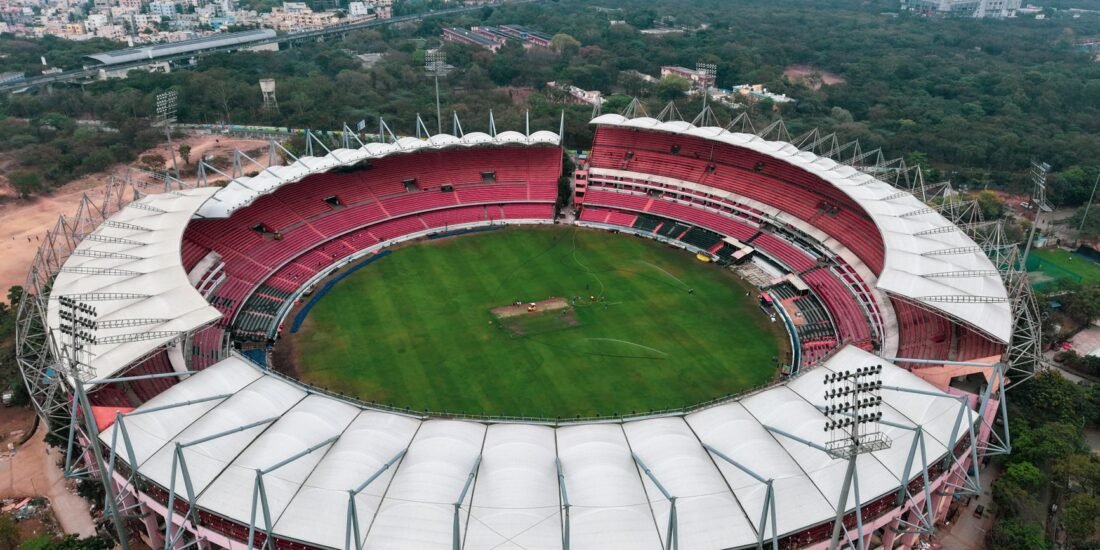
The high demand for IPL tickets has also generated localized black-marketing and counterfeiting operations. In May 2026, the Hyderabad Police arrested three individuals near the Rajiv Gandhi International Cricket Stadium for using forged letters to acquire premium tickets. The suspects had downloaded official letterheads of judges, ministers, and governors, forged their signatures, and submitted them to cricket associations (including the HCA and TNCA) to claim complimentary VIP tickets, which they then sold for illegal profit.
Additionally, during a match between Royal Challengers Bengaluru (RCB) and Chennai Super Kings (CSK) in Bengaluru, the Central Crime Branch arrested 11 individuals—including local stadium canteen staff—for selling black-market tickets.
To counter these practices, the Karnataka State Expert Committee mandated that 80% of tickets for matches at the M. Chinnaswamy Stadium be sold as digital “m-tickets”. The security features of this system include:
- Delayed QR Code Activation: The unique entry QR code is not generated until exactly five hours before the match and can only be opened using a secure, SMS-verified passcode.
- Single-Use Entry Validation: Once scanned at the turnstile gate, the QR code’s digital signature is immediately invalidated in the system. If a duplicated screenshot of the same QR code is scanned again, the gate remains locked, and security is alerted.
- Forensic Tracking: The digital signature of each m-ticket leaves an audit trail, allowing the police to trace the original purchasing phone number, payment gateway, and the exact time the ticket was first accessed. This data, combined with AI-enabled CCTV surveillance, has helped law enforcement track down black-market sellers.
Nuanced Policy Conclusions and Actionable Governance Solutions
The history of scams associated with the IPL reveals a persistent tension between rapid commercialization and regulatory oversight. To address these vulnerabilities and protect the integrity of the sport, several systemic reforms should be considered:
1. Enactment of a Dedicated Federal Sports Fraud Statute
The prosecution of spot-fixing and match-fixing in India has occasionally been hindered by the lack of a specific “sports fraud” law. In the 2013 spot-fixing trial, criminal courts dropped charges against the accused players because prosecutors attempted to apply the Maharashtra Control of Organised Crime Act (MCOCA). The court ruled that there was insufficient evidence of an organized crime syndicate to justify MCOCA’s high evidentiary standards, and cheating under the standard Indian Penal Code was difficult to prove in the absence of a clear statutory definition of sporting fraud. Implementing a dedicated federal law on sports fraud would provide clear legal definitions, investigative powers, and appropriate criminal penalties for fixing, insider trading, and illegal sports betting.
2. Standardization of Administrative Dispute Resolution
The costly arbitral awards against the BCCI in the Kochi Tuskers and Deccan Chargers cases demonstrate the financial risks of arbitrary administrative decisions. The BCCI should standardize its franchise evaluation and dispute-resolution processes, ensuring that termination remains a measure of last resort used only after transparent, timed cure periods are exhausted.
3. Transition to Zero-Trust Digital Security in the PMOA
As communication technologies shrink and become more integrated into daily wear (such as smart glasses and bone-conduction audio devices), physical searches alone may become less effective at securing restricted areas. The BCCI should consider deploying active radio-frequency monitoring and signal-detection technologies within PMOA boundaries to detect and block unauthorized data transmissions in real-time.
4. Integration of National Cyber-Forensics in Sports Betting Detection
The Mehsana synthetic league and online betting scams highlight the role of digital communication tools, such as Telegram, YouTube, and unregulated online betting platforms, in facilitating sports-related fraud. Addressing these offshore-hosted, digital rackets requires closer coordination between the BCCI’s Anti-Corruption Unit, state police cyber units, and international law enforcement agencies like Interpol to disrupt illicit financial flows and secure online spaces.