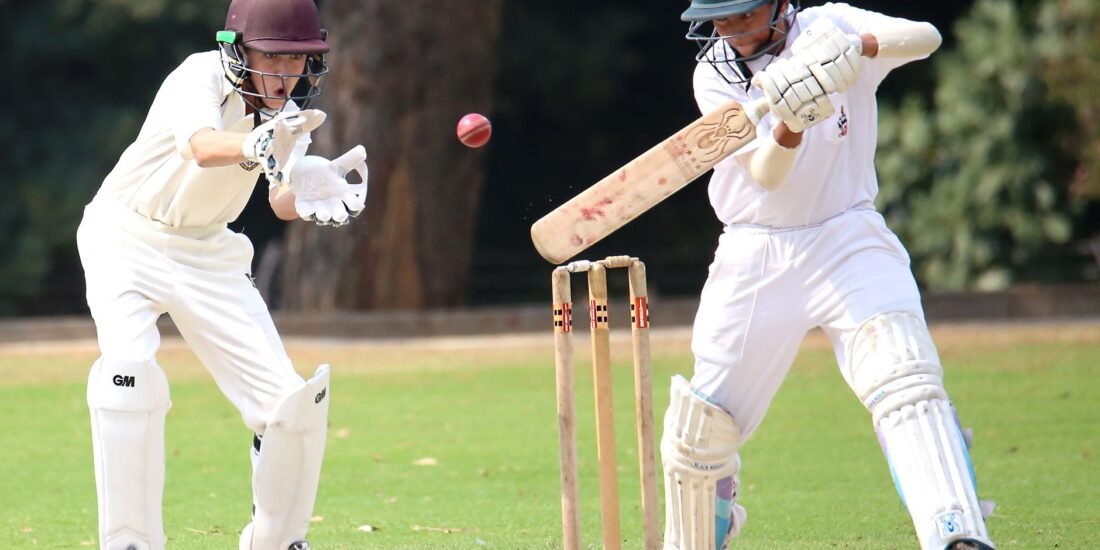
In-Depth Analysis of Global Cricket Statistics: Historical Progression, Pitch Architecture, Format-Specific Peaks, and Contemporary Evolutionary Trends
Section 1: The Genesis and Evolution of Cricket: From the Weald to Global Codification
The structural development of cricket represents a historical process of codification, imperial expansion, and technological adaptation. Expert consensus indicates that the sport was originally devised during the Saxon or Norman periods by children residing in the Weald, an area of dense woodlands and clearings in southeast England. The earliest recorded reference to adult participation dates to 1611, when two men in Sussex were prosecuted for playing cricket on Sunday in lieu of attending church services; in the same year, a dictionary defined cricket as a boys’ game, signifying that adult involvement was a relatively recent development. The game is hypothesized to have derived from the sport of bowls, modified by the intervention of a batsman attempting to prevent the ball from reaching its target by striking it away.
By the mid-17th century, village cricket had flourished, and the first “county teams” emerged after the Restoration of the monarchy in 1660. This period saw members of the nobility employing “local experts” from village matches as the earliest professional players, funded largely by aristocratic patronage and gambling interests. The first match featuring teams utilizing county names was recorded in 1709. Women’s cricket also boasts a deep history, with the earliest documented match played in Surrey in 1745.
Technological innovations continually reshaped the mechanics of play. Sometime after 1760, the practice of rolling the ball along the ground underarm was superseded when bowlers began pitching the ball. In direct response to this tactical shift, the traditional hockey-stick-style bat was abandoned in favor of the straight bat. The laws governing these contests were first codified in 1744 and subsequently amended in 1774 to introduce the leg-before-wicket (lbw) rule, a third (middle) stump, and a maximum bat width. These early regulations were drawn up by the Star and Garter Club, whose members eventually established the Marylebone Cricket Club (MCC) at Lord’s in 1787. The MCC immediately assumed custodianship of the Laws of Cricket, maintaining and revising them to the present day.
The global dispersion of the game proceeded in tandem with the expansion of the British Empire. Colonists, military personnel, and mariners of the East India Company introduced the sport to North America in the 17th century, followed by the West Indies and the Indian subcontinent in the early 18th century. Colonization carried the sport to Australia in 1788, with New Zealand and South Africa adopting the game in the early 19th century. The inaugural international fixture took place in 1844 between the United States and Canada, structured under the multi-day format that preceded formal Test cricket. Formal Test matches commenced in 1877 when England played Australia at Melbourne, establishing a rivalry that would be formalized as “The Ashes” in 1882. Today, the sport is administered by the International Cricket Council (ICC), which oversees more than one hundred member nations, twelve of whom hold full Test-playing status.
Section 2: Dimensional Architecture and Structural Governance of the Sport
The physical arena and rules of cricket are governed by highly precise spatial and structural dimensions. Matches are contested between two teams consisting of eleven players each. The playing field is typically an expansive oval marked by an outer boundary line, at the center of which sits a rectangular pitch measuring exactly 22 yards ($20.12\text{ meters}$) in length and 10 feet ($3.05\text{ meters}$) in width.
At each end of this pitch are positioned the wickets, which consist of three wooden stumps topped by two bails. The total width of the wicket structure is 9 inches ($22.86\text{ cm}$), and the stumps stand 28 inches ($71.1\text{ cm}$) tall. The popping crease, which defines the safe zone for the batsman and the legal limit for the bowler’s front foot, is drawn 4 feet ($1.22\text{ meters}$) in front of the stumps. The playing boundaries typically extend between 65 and 90 meters from the center of the pitch. In limited-overs formats, an inner fielding circle with a radius of 30 yards is utilized to regulate fielding placements during powerplay overs.
The fundamental unit of play is the “over,” which comprises six consecutive fair deliveries bowled from one end of the pitch to the other. The evolution of international cricket has yielded several distinct formats designed to balance tactical depth with commercial viability.
Table 1: Structural Comparison of Professional Cricket Formats
| Format | Duration | Innings per Team | Overs / Deliveries per Innings | Key Rules & Match Mechanics |
| Test Cricket | Up to 5 days | 2 | Unlimited | Red ball, white clothing, no fielding restrictions, draw is possible if overs expire. |
| One Day International (ODI) | 1 day (approx. 8 hours) | 1 | 50 overs (300 balls) | White ball, colored clothing, inner circle restrictions, Super Over used for ties. |
| Twenty20 International (T20I) | 3 to 4 hours | 1 | 20 overs (120 balls) | High-tempo, aggressive fielding restrictions, Super Over used to decide ties. |
| The Hundred | Approx. 3 hours | 1 | 100 balls | 10-ball blocks, bowlers deliver 5 or 10 consecutive balls, simplified for new audiences. |
| Ten-10 (T10) | Approx. 90 minutes | 1 | 10 overs (60 balls) | Ultra-short format focused on continuous boundary hitting. |
Section 3: Historical Frontiers in Test Cricket Run-Scoring
Test cricket provides the ultimate canvas for individual endurance and classical batting technique. Batting excellence in this format is defined by the capacity to construct long innings, manage physical fatigue, and exploit bowling variations over multiple days. The absolute benchmark for individual run-scoring remains the undefeated 400 compiled by Brian Lara of the West Indies against England at St. John’s, Antigua, in April 2004. Lara faced 582 deliveries across a grueling 778 minutes, striking 43 fours and 4 sixes to propel his side to a declaration at 751/5. This historic performance reclaimed the world record from Australia’s Matthew Hayden, who had scored 380 against Zimbabwe only six months prior.
The historical progression of the individual Test scoring record demonstrates how modern fitness, technical adjustments, and bat technology have enabled batsmanship to reach unprecedented peaks.
Table 2: Chronological Progression and Modern Extensions of the Men’s Individual Test Scoring Record
| Era / Date | Batsman | National Side | Innings Score | Opponent | Venue | Deliveries Faced |
| Feb-Mar 1958 | Garry Sobers | West Indies | 365* | Pakistan | Kingston, Jamaica | 461 |
| April 1994 | Brian Lara | West Indies | 375 | England | St. John’s, Antigua | 538 |
| October 2003 | Matthew Hayden | Australia | 380 | Zimbabwe | Perth, Australia | 437 |
| April 2004 | Brian Lara | West Indies | 400* | England | St. John’s, Antigua | 582 |
| July 2025 | Wiaan Mulder | South Africa | 367* | Zimbabwe | Bulawayo, Zimbabwe | 334 |
The most significant contemporary addition to this elite threshold occurred in July 2025, when stand-in South African captain Wiaan Mulder struck an undefeated 367 against Zimbabwe at the Queens Sports Club in Bulawayo. Mulder’s innings was a masterclass in modern acceleration, with his triple-century coming off just 297 deliveries—the second-fastest triple-century in Test history, trailing only India’s Virender Sehwag, who reached the milestone in 278 balls. Mulder finished the first day overnight on 264 off 259 deliveries, surviving a dismissal on 247 when he was clean-bowled by Tanaka Chivanga on a registered no-ball. On the second morning, he added 103 runs in a single session to join Don Bradman and Wally Hammond as the only batsmen to register hundreds in consecutive Test sessions.
Mulder’s performance represents the highest score by a South African batsman in Test cricket, eclipsing Hashim Amla’s 311* set in 2012, and the highest score by a South African captain, surpassing Graeme Smith’s 277. Mulder chose to declare at lunch on the second day with South Africa on 626/5, prioritizing a team victory over chasing Lara’s 400* out of mutual respect and tactical pragmatism. This performance drastically altered his career Test batting average, raising it from 22.21 to 38.43.
This standard of red-ball dominance is mirrored in the team accomplishments of the era. South Africa translated their strong form into a maiden ICC World Test Championship title in June 2025. Facing Australia in the final at Lord’s, the Proteas secured a 5-wicket victory. Kagiso Rabada delivered a decisive performance with match figures of 9/110 (5/51 and 4/59), while Australia’s skipper Pat Cummins took 6/28 in South Africa’s first innings. South Africa successfully chased 282 in the final innings, led by an unbeaten 136 from Player of the Match Aiden Markram.
In women’s Test matches, England’s Jan Brittin holds the record for the highest career run aggregate, compiling 1,935 runs in 27 matches. The highest individual score remains 242, recorded by Pakistan’s Kiran Baluch against the West Indies in 2004.
Recently, Australia’s Ellyse Perry became her nation’s leading Test run-scorer, surpassing Karen Rolton to breach the 1,000-run milestone. Perry is only the eleventh player in history to score 1,000 runs in women’s Tests, and the second to achieve 1,000 runs across all three international formats. This elite multi-format run-scoring capability is supported by high-performing peers globally, as detailed in the historical records of leading Test run-scorers.
Table 3: Leading Run-Scorers in Indian Women’s Test Cricket History
| Rank | Player | Matches | Innings | Batting Average | High Score | Total Runs |
| 1 | Shanta Rangaswamy | 16 | 26 | 32.60 | 108 | 750 |
| 2 | Shubhangi Kulkarni | 19 | 32 | 23.33 | 118 | 700 |
| 3 | Mithali Raj | 12 | 19 | 43.68 | 214 | 699 |
| 4 | Smriti Mandhana | 8 | 14 | 48.84 | 149 | 635 |
| 5 | Gargi Banerji | 12 | 22 | 27.90 | 75 | 614 |
Section 4: Quantitative Dynamics of One Day International Run-Scoring
One Day Internationals demand a strategic balance between the tactical patience of Test matches and the rapid, boundary-focused scoring of T20 cricket. The format’s historical development has been defined by a steady climb in run-rates and total scores, driven by modifications to fielding restrictions and ball conditions.
In men’s ODIs, Sachin Tendulkar of India remains the leading run-scorer in history, compiling 18,426 runs over 463 matches, followed by Kumar Sangakkara of Sri Lanka (14,234) and Virat Kohli of India (14,085). Kohli holds the distinction of being the fastest to reach 14,000 runs, demonstrating a high rate of run accumulation.
Table 4: Top Career Run-Scorers in Men’s One Day Internationals
| Rank | Player | National Side | Matches | Career ODI Runs | Centuries / Fifties |
| 1 | Sachin Tendulkar | India | 463 | 18,426 | 49 / 96 |
| 2 | Kumar Sangakkara | Sri Lanka | 404 | 14,234 | 25 / 93 |
| 3 | Virat Kohli | India | 299 | 14,085 | 50 / 72 |
| 4 | Ricky Ponting | Australia | 375 | 13,704 | 30 / 82 |
| 5 | Sanath Jayasuriya | Sri Lanka | 445 | 13,430 | 28 / 68 |
In individual matches, Rohit Sharma of India holds the record for the highest score in ODI history, hitting 264 runs off 173 deliveries against Sri Lanka at Kolkata in November 2014. Sharma’s innings, featuring 33 fours and 9 sixes, is a prime example of the modern ability to accelerate scoring in the latter half of an innings. He remains the only player with three ODI double-centuries (209, 264, and 208*).
In the women’s format, New Zealand’s Amelia Kerr holds the record for the highest individual score, striking an undefeated 232 against Ireland in Dublin in June 2018. Achieving this at just 17 years of age, Kerr broke Belinda Clark’s 21-year-old record of an unbeaten 229 against Denmark in 1997. Clark’s historic innings was the first double-century scored in any international limited-overs match, pre-dating Sachin Tendulkar’s first men’s double-century by thirteen years.
In career totals, Mithali Raj of India remains the absolute leader in women’s ODI runs, compiling 7,805 runs across 232 matches, while maintaining an average of 50.68.
Table 5: High-Performing Individual Batting Inning Peaks in WODI History
| Rank | Batter | National Side | Score | Opponent | Venue | Date | Strike Rate |
| 1 | Amelia Kerr | New Zealand | 232* | Ireland | Dublin, Ireland | 13 June 2018 | 160.00 |
| 2 | Belinda Clark | Australia | 229* | Denmark | Mumbai, India | 16 Dec 1997 | 147.74 |
| 3 | Chamari Athapaththu | Sri Lanka | 195* | South Africa | Potchefstroom, SA | 17 April 2024 | 140.28 |
| 4 | Deepti Sharma | India | 188 | Ireland | Potchefstroom, SA | 15 May 2017 | 117.50 |
| 5 | Laura Wolvaardt | South Africa | 184* | Sri Lanka | Potchefstroom, SA | 17 April 2024 | 125.17 |
This upward trend in scoring is also visible in team totals. In September 2025, England’s men posted 414/5 against South Africa, eventually bowling them out for 72 to record a 342-run victory, the largest win margin by runs in men’s ODI history. In the women’s format, Australia and India combined for a historic match aggregate of 781 runs in September 2025, highlighting a broader global trend of run-rate inflation across the game.
Section 5: The Short-Format Velocity Paradigm: T20 Internationals and Global Leagues
The introduction of Twenty20 cricket compressed the game’s duration, forcing teams to prioritize immediate run-scoring impact over wicket preservation. This high-tempo format has not only expanded global interest but has also introduced franchise leagues like the Indian Premier League (IPL), which serve as incubators for innovative batting techniques.
In men’s T20Is, India’s Rohit Sharma leads the career scoring charts with 4,231 runs, followed closely by his teammate Virat Kohli with 4,188 runs and Pakistan’s Babar Azam with 4,145 runs. In women’s T20Is, Suzie Bates of New Zealand is the highest run-scorer with 4,584 runs, placing her more than 1,000 runs ahead of her closest female peer.
The record for the highest individual score in a single T20I match belongs to Aaron Finch of Australia, who hit 172 runs off 76 balls against Zimbabwe in Harare in July 2018. In women’s T20Is, Argentina’s Lucia Taylor holds the record with 169 runs off 84 balls against Chile in October 2023. Taylor’s innings was part of a historic partnership with Albertina Galan (145*), setting a world-record any-wicket T20I stand of 350 runs and guiding Argentina to a team score of 427/1—the highest total in T20 history.
The speed of run accumulation has reached remarkable levels, as demonstrated by the fastest recorded international centuries.
Table 6: Fastest Centuries in T20 International History
| Rank | Batsman | National Side | Opponent | Venue | Deliveries Faced |
| 1 | Sahil Chauhan | Estonia | Cyprus | Episkopi, Cyprus | 27 |
| 2 | Muhammad Fahad | Turkey | Bulgaria | Bulgaria | 29 |
| 3 | Jan Nicol Loftie-Eaton | Namibia | Nepal | Kirtipur, Nepal | 33 |
| 4 | Finn Allen | New Zealand | South Africa | T20 World Cup | 33 |
| 5 | David Miller | South Africa | Bangladesh | Potchefstroom, SA | 35 |
| 6 | Rohit Sharma | India | Sri Lanka | Indore, India | 35 |
This shift toward high-velocity batting was on full display during the 2026 ICC Men’s T20 World Cup, co-hosted by India and Sri Lanka in February and March 2026. India claimed their third T20 World Cup title by defeating New Zealand by 96 runs in the final at Ahmedabad. In the final, India posted 255/5, the highest-ever total in a T20 World Cup final, led by Sanju Samson’s individual score of 89 off 46 balls. Jasprit Bumrah earned Player of the Match honors with bowling figures of 4/15.
The tournament’s standout batsman was Pakistan’s Sahibzada Farhan, who broke Virat Kohli’s single-edition scoring record by compiling 383 runs at an average of 76.60, including two centuries.
At the domestic franchise level, the IPL has pushed batting metrics to new extremes. In the 2026 IPL season, Royal Challengers Bengaluru (RCB) defended their title by defeating the Gujarat Titans by five wickets on May 31, 2026. Virat Kohli cemented his position as the most prolific batsman in IPL history, reaching a career total of 9,261 runs across 282 matches. Kohli scored an undefeated 75* off 42 balls in the final, earning Player of the Match honors.
However, the story of the 2026 IPL season belonged to 15-year-old batting prodigy Vaibhav Sooryavanshi of the Rajasthan Royals. Sooryavanshi claimed the Orange Cap by scoring 776 runs in just 16 matches, breaking Chris Gayle’s long-standing single-season record for the most sixes hit. He also became the first player to score 500 runs within the powerplay in a single season, highlighting how youth academies are producing players with highly optimized boundary-hitting techniques from a very young age.
Table 7: Leading Run-Scorers in IPL History (as of June 2026)
| Rank | Player | Team(s) Played | Career IPL Runs | High Score | Centuries / Fifties |
| 1 | Virat Kohli | RCB | 9,261 | 113* | 9 / 67 |
| 2 | Rohit Sharma | DCH / MI | 7,046 | 109* | 2 / 47 |
| 3 | Shikhar Dhawan | DC/DCH/MI/PBKS/SRH | 6,769 | 106* | 2 / 51 |
| 4 | David Warner | DC / SRH | 6,565 | 126 | 4 / 62 |
| 5 | Suresh Raina | CSK / GL | 5,528 | 100* | 1 / 39 |
The physical limits of rapid run-scoring are also visible in the broader T20 ecosystem, where Chris Gayle leads all-time career run-scoring with 14,562 runs, followed by Kieron Pollard (14,482) and Alex Hales (14,449). This specialized output can be analyzed by batting position, demonstrating how strategic roles have been optimized for specific match phases.
Table 8: Most Career Runs by Batting Position in T20 History
| Position | Player | Innings | Total Runs | Batting Average | Career Span |
| Opener | Alex Hales | 490 | 13,669 | 30.24 | 2009–2026 |
| Number 3 | Suresh Raina | 247 | 7,164 | 33.63 | 2008–2021 |
| Number 4 | Shoaib Malik | 246 | 6,912 | 38.18 | 2005–2025 |
| Number 5 | David Miller | 221 | 5,386 | 38.74 | 2008–2026 |
| Number 6 | Kieron Pollard | 218 | 5,234 | 35.84 | 2008–2026 |
| Number 7 | Andre Russell | 125 | 2,611 | — | — |
Section 6: Comparative Analysis of All-Rounder Benchmarks and Multi-Format Adaptation
While specialist batsmen dominate aggregate scoring lists, the historical value of the all-rounder remains a crucial factor in team construction. The ultimate benchmark for modern multi-dimensional impact is held by South Africa’s Jacques Kallis. Over a career spanning 166 Test matches and 329 ODIs, Kallis became the only player in the history of the sport to score over 10,000 runs and claim more than 250 wickets in both formats.
Table 9: Multi-Dimensional Career Metrics of Jacques Kallis
| Format | Matches | Runs Scored | Batting Average | Centuries / Fifties | Wickets Taken | Bowling Average | Catches |
| Test | 166 | 13,289 | 55.37 | 45 / 58 | 292 | 32.65 | 200 |
| ODI | 329 | 11,579 | 44.36 | 17 / 86 | 273 | 31.79 | 131 |
The physical demands of maintaining an elite batting average in the mid-50s while operating as a frontline fast-medium swing bowler makes Kallis’s longevity unique. By comparison, West Indian legend Sir Garfield Sobers achieved 8,032 runs and 235 wickets in 93 Tests, playing with a similar statistical balance but across a shorter career span.
Another distinct modern benchmark is held by Chris Gayle of the West Indies. While widely celebrated as a pioneer of T20 batting—being the first to score over 14,000 runs and hit more than 1,000 sixes in the shortest format—Gayle’s multi-format peak is highlighted by his unique century record. He is the only player in cricket history to score a triple-century in Tests (333), a double-century in ODIs (215), and a century in T20Is (117), showing a rare ability to adapt his aggressive style across different match lengths.
Furthermore, modern players such as Jason Holder of the West Indies have continued this versatile lineage, becoming only the second West Indian after Sir Garfield Sobers to achieve the dual milestone of 2,500 runs and 150 wickets in Test matches. During his 2018 campaign, Holder registered 336 Test runs alongside 33 wickets at a bowling average of 12.30, representing the most efficient bowling average recorded by a fast bowler in over a century.
Section 7: Structural Trajectory and Systemic Projections of Modern Cricket
The statistical landscape of cricket in 2026 reveals three major systemic trends that will likely shape the sport’s future:
- The Compression of Batting Development: The success of young players like 15-year-old Vaibhav Sooryavanshi in the IPL and 17-year-old Amelia Kerr in international play shows that modern junior coaching is highly effective at preparing young players for professional demands. Batting techniques are now optimized for high-power, high-frequency boundary hitting from a very early age.
- The Dominance of Strike Rates over Averages: Across all limited-overs cricket, teams are prioritizing immediate scoring impact over batting longevity. Modern batting tactics value brief, high-strike-rate contributions—such as powerplay cameos—more than slower, defensive half-centuries. This shift is changing how batting performance is measured, with classical career averages losing some of their traditional weight in player selection.
- Format Congestion and Specialization: The rise of domestic franchise leagues is creating distinct groups of specialist players. While a few elite cricketers continue to play all three formats, the intense physical and mental demands of year-round cricket are leading many to focus on specific formats. This trend could protect the classical style of Test match play while allowing T20 batting techniques to develop independently toward even higher scoring rates.
Ultimately, these trends suggest that while long-standing career aggregates in Test and ODI formats remain highly respected, the future of cricket will likely be defined by players who can deliver explosive, high-impact performances under intense match pressure.